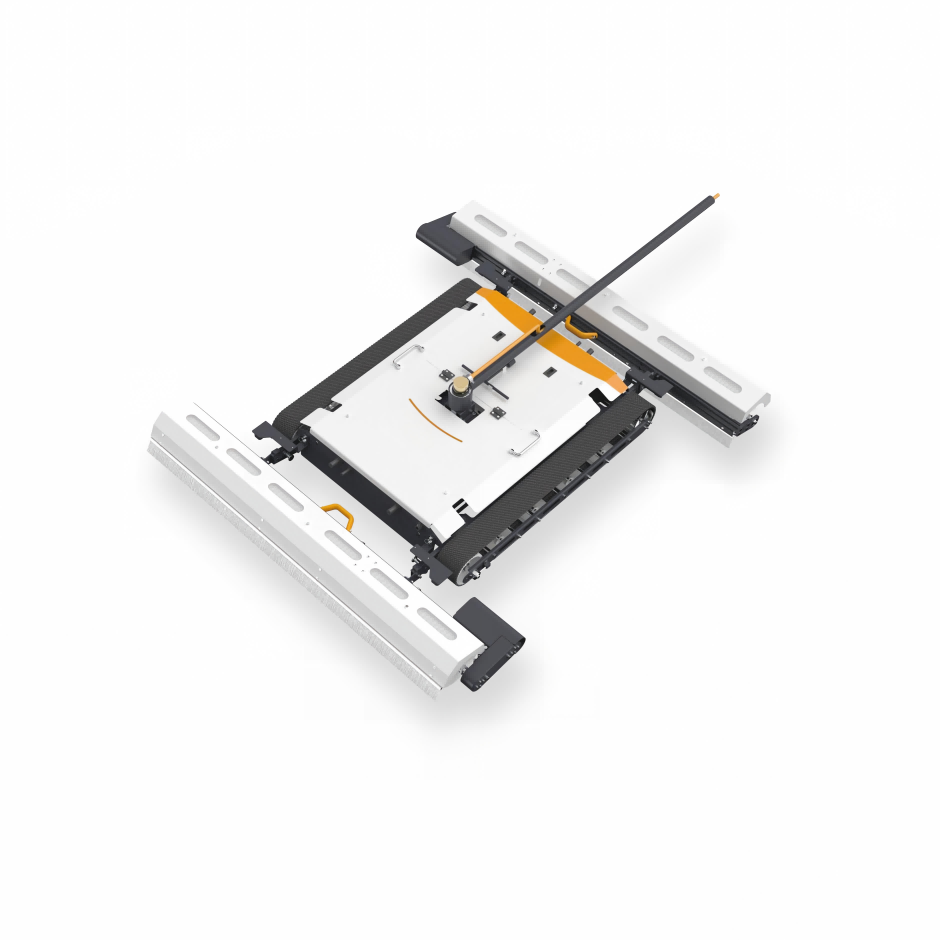
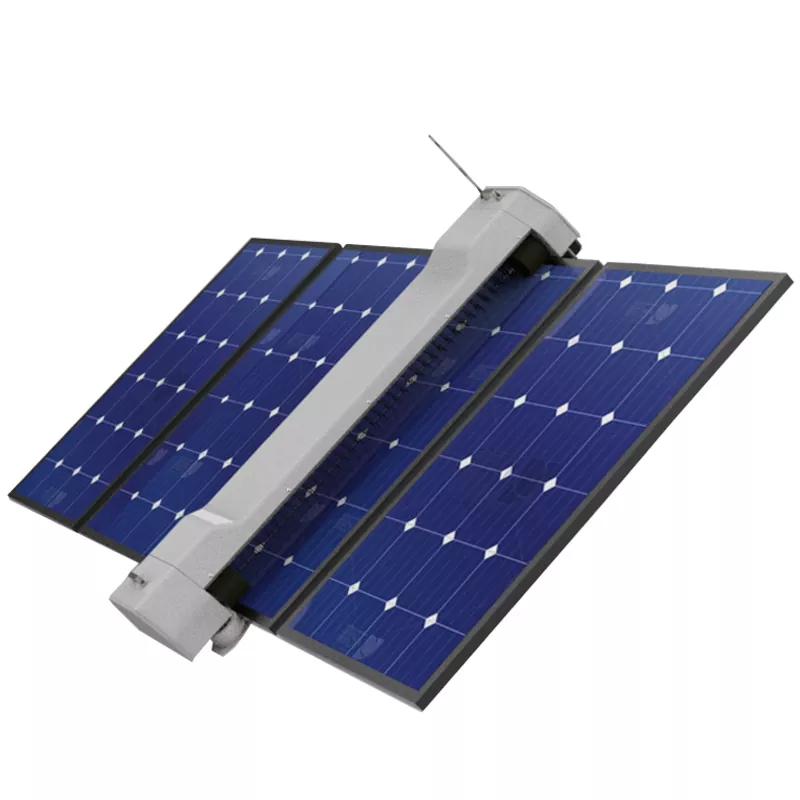
Solar Cleaning Robot
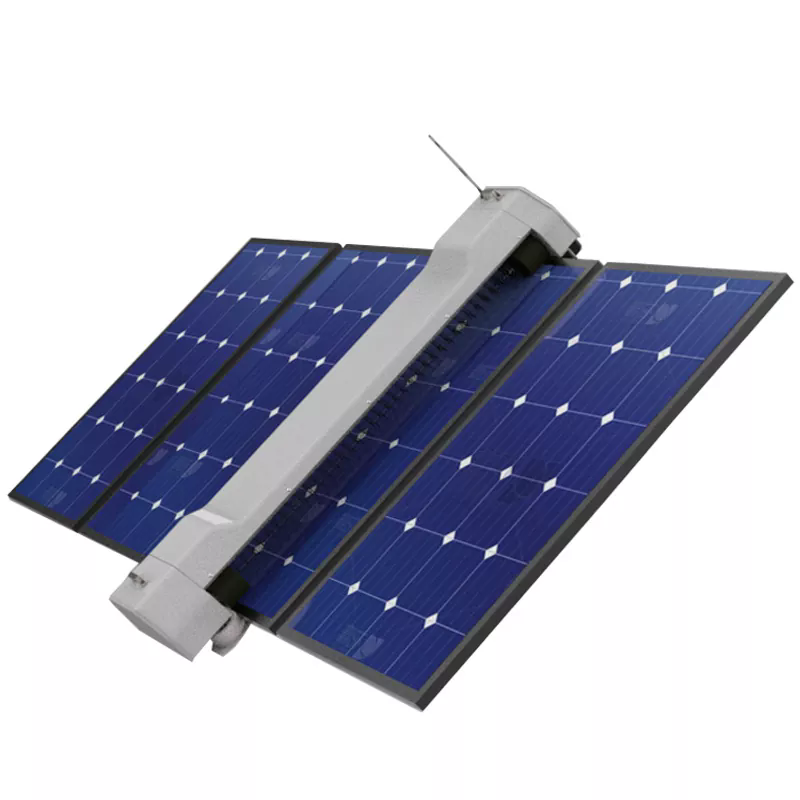
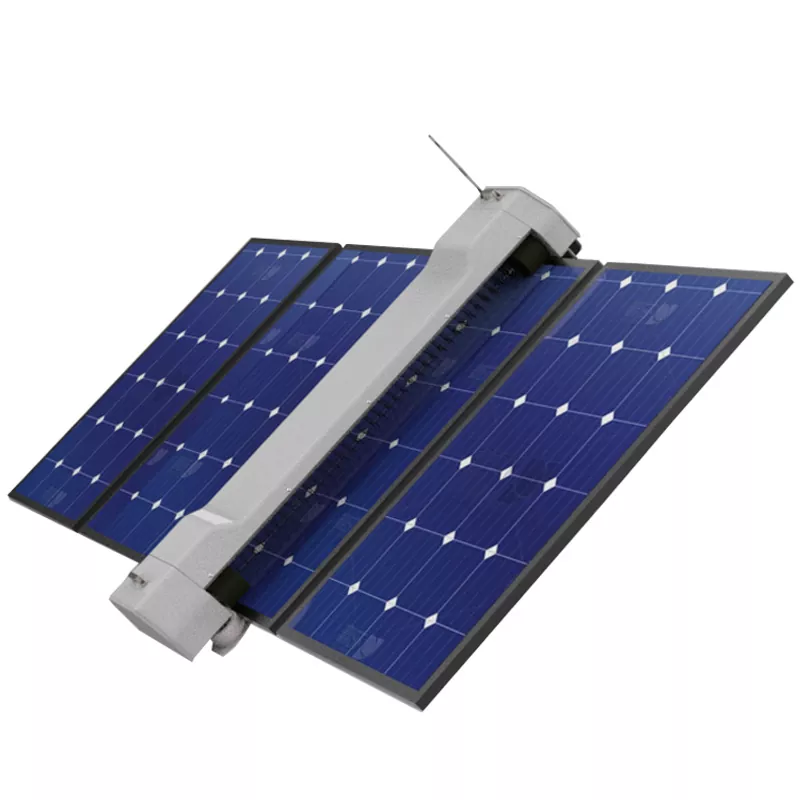
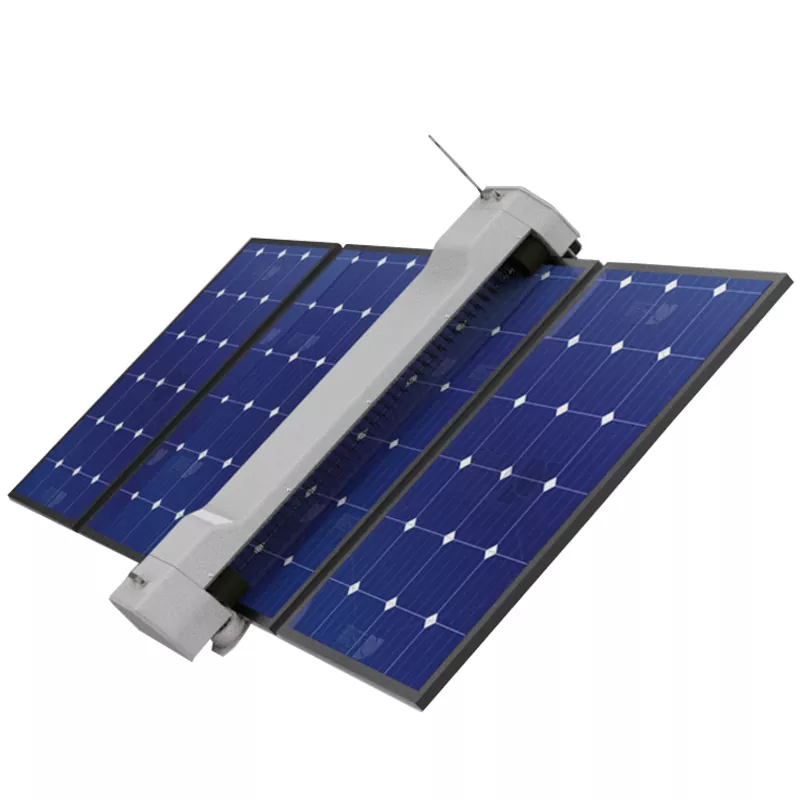
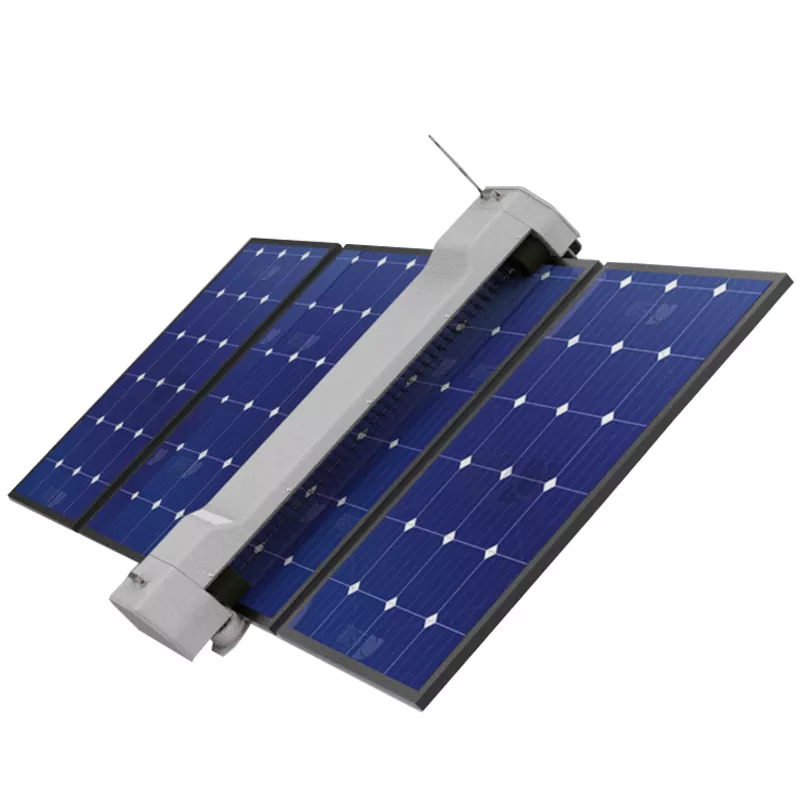
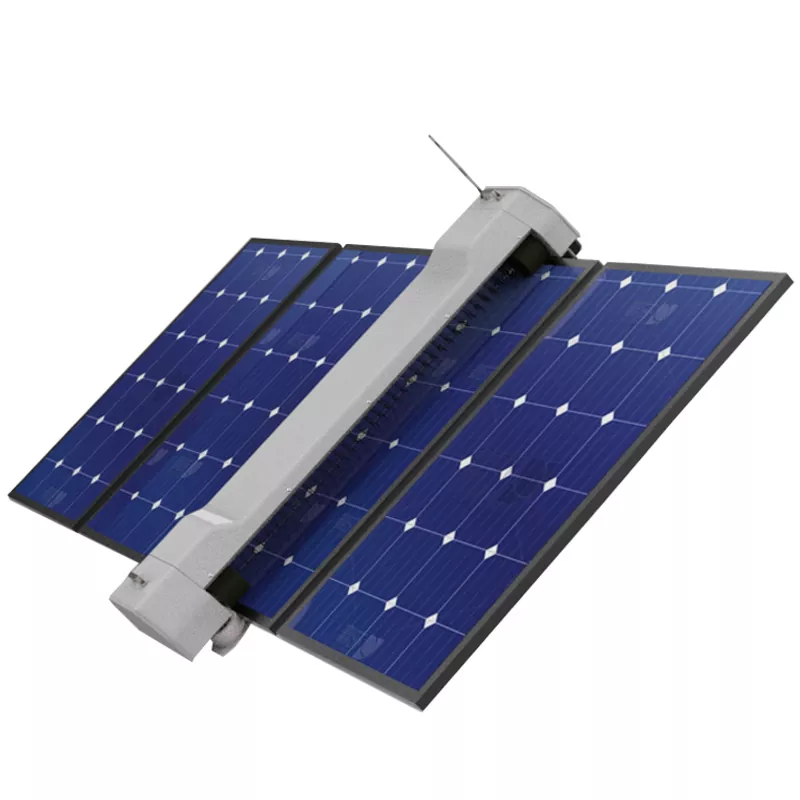
Suzhou Ruitai’s Solar Cleaning Robot is built around high strength, high precision, and ultra-stable operation, making it suitable for a wide range of solar power plant applications. With BeiDou navigation and AI path planning, the robot can avoid obstacles independently and accurately detect dirt for thorough cleaning. Contact us today and get a factory direct price for your project!
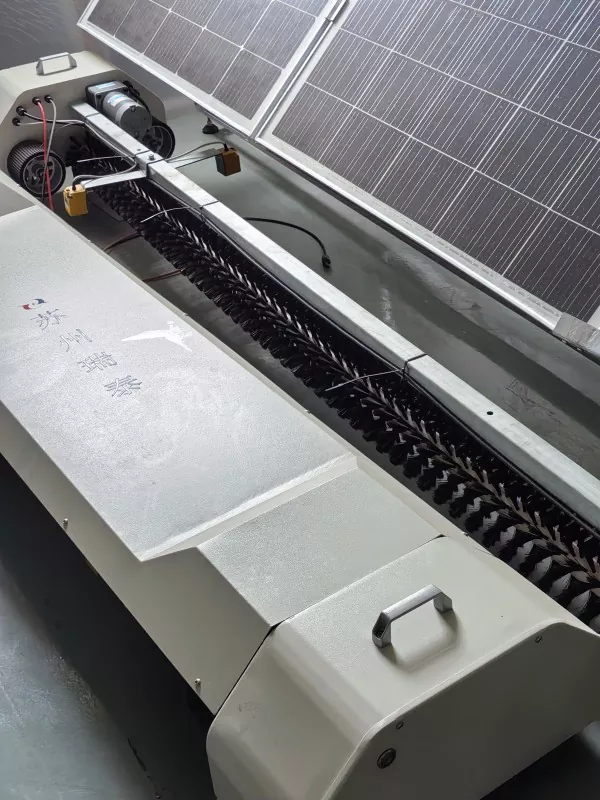
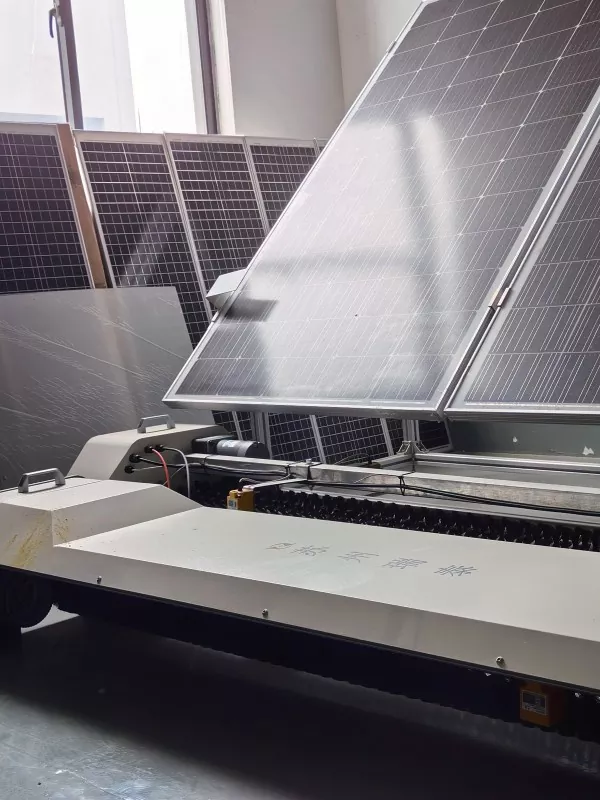
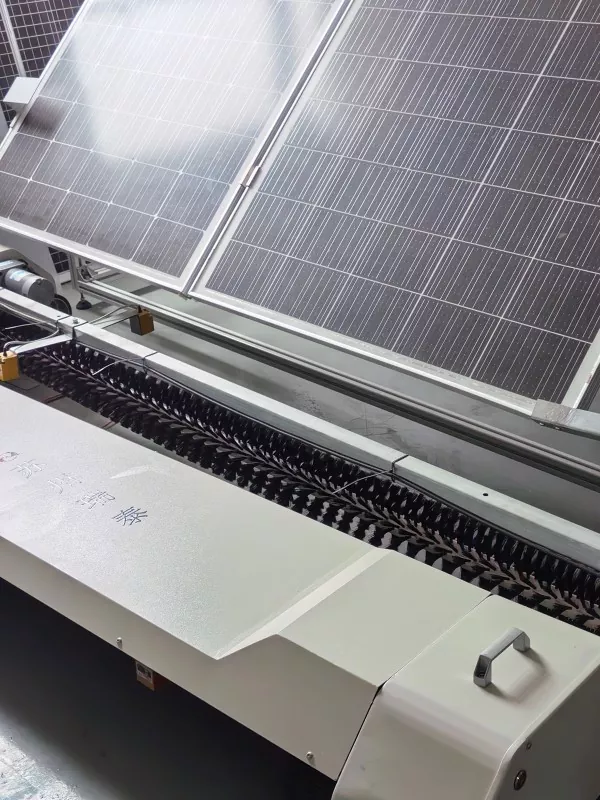
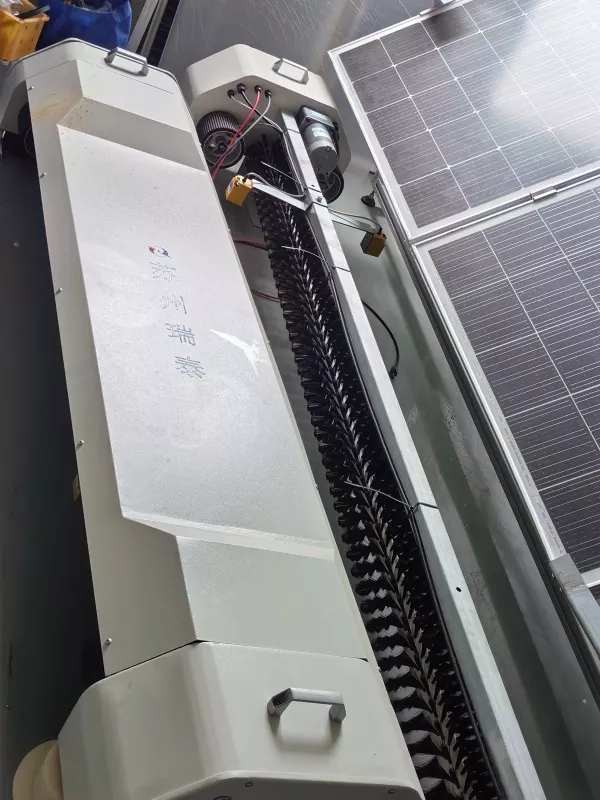
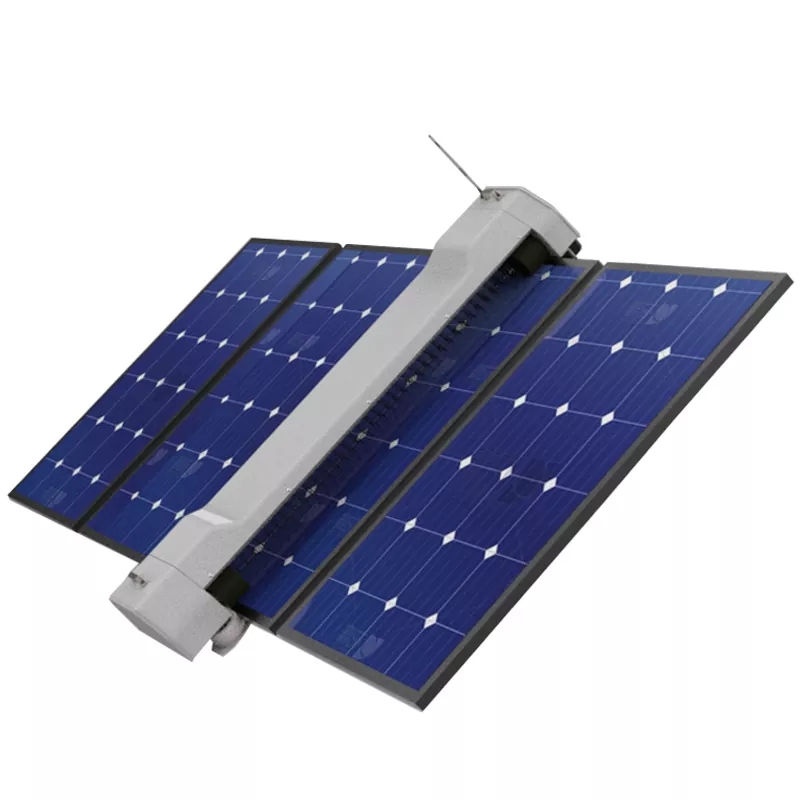
Suzhou Ruitai's Solar Cleaning Robot is designed for PV cleaning work and can clean up to 1 MW of solar panels per day. It uses the BeiDou Satellite Navigation System to provide centimeter-level positioning accuracy. Once the route is planned, the robot can navigate independently and avoid obstacles. Its shock-absorbing, anti-slip tracks allow stable movement across complex rooftop surfaces. A three-level fire protection system helps ensure safe operation. The robot provides thorough cleaning while protecting PV modules from damage, keeping the panels at optimal light transmission and significantly improving the overall power generation efficiency of the solar power plant.
Product Parameter
|
Product Model |
RT-PVCR-01 |
Operating Temperature Range |
-30℃~60℃ |
|
Operating Voltage |
DC 24V |
Equipment Weight |
Approximately 50KG |
|
Control Method |
Manual / Automatic / Remote Control |
Operating Noise |
<30dB |
|
Installation and Movement |
Span over the top of PV modules |
Operating Speed |
12-20m/min |
|
Dimensions |
(500 + W)mm × 580mm × 300mm (Adjustable) |
Control Method |
No by-products, no toxic or harmful substances generated |
|
Protection Rating |
IP65 |
||
When Is the Best Time to Clean?
PV module cleaning is a key part of ensuring power generation at a solar power plant. Dust, fallen leaves, snow, and other debris can seriously reduce photovoltaic conversion efficiency, so solar power plants must establish a proper cleaning system.
Cleaning should avoid high temperatures and strong sunlight at midday to prevent glass breakage, and should be carried out in the early morning, late afternoon, or on cloudy days.
The cleaning frequency should also be adjusted according to local environmental conditions, such as once every quarter in normal areas and once a month in heavily polluted areas, with timely cleaning after rainy or snowy weather.
To ensure safety and effectiveness, when using the solar cleaning robot to clean, the O&M work should follow the standard process of "power off – inspection – cleaning – tightening – power on – recording."
Comprehensive Cleaning Applications
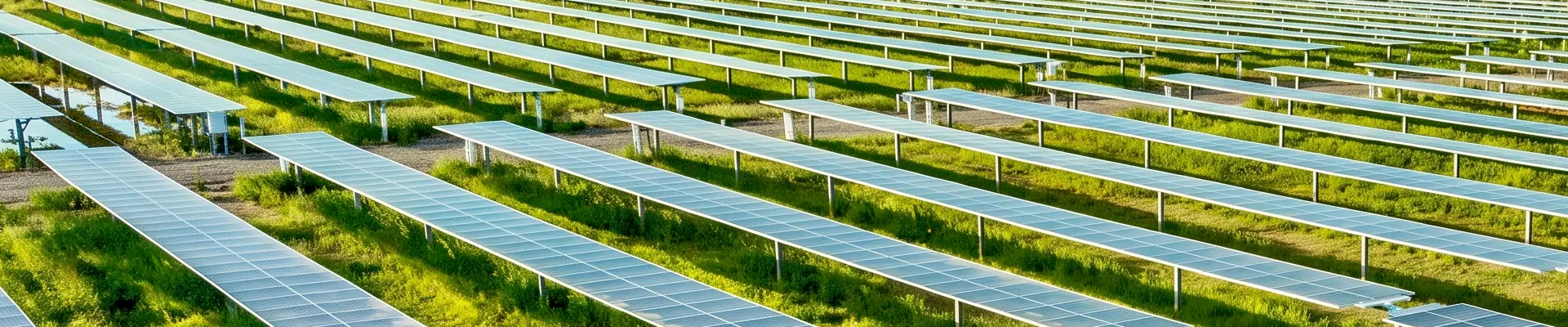
This Solar Cleaning Robot is designed for the large-scale and complex cleaning requirements of distributed photovoltaic (PV) power plants. Engineered for high-strength, high-precision, and ultra-stable operation, it is suitable for residential systems, C&I (commercial and industrial) rooftops, carports, and agrivoltaic projects.
1. Large-scale Ground-mounted PV Power Plants
Suitable for MW-scale PV projects.
Advantages: Enables automated, large-scale module cleaning; reduces O&M costs; supports centralized operations and maintenance management.
2. PV Projects in Desert and Arid Regions
High dust levels in desert regions are a major source of PV module soiling.
Advantages: Increases cleaning frequency; reduces water consumption; minimizes the need for personnel to enter harsh environments.
3. Rooftop PV Systems
Suitable for factory roofs, warehouse roofs, commercial building PV installations, etc.
Advantages: Helps enterprises mitigate risks associated with rooftop operations; improves maintenance efficiency for distributed PV systems.
4. Smart PV O&M Projects
Ruitai’s Solar Cleaning Robot integrates with SCADA systems, IoT platforms, and remote monitoring systems to enable digital and intelligent management.
Advantages: Supports automated task management and equipment status monitoring; facilitates fault alerts and data analysis.
What Are the Advantages of Solar Cleaning Robots Compared to Manual Cleaning?
|
Comparison Criteria |
Manual Cleaning |
Solar Cleaning Robot |
|
Operation Method |
Manual on-site operations |
Automatic operation |
|
Cleaning Efficiency |
Dependent on personnel |
Stable and continuous |
|
O&M Costs |
High long-term costs |
Reduces manual input |
|
Safety |
Risks associated with working at heights |
Minimizes manual tasks |
|
Management Approach |
Decentralized management |
Centralized monitoring |
|
Data Logging |
Limited |
Supports intelligent data management |
Why Choose the Ruitai Solar Cleaning Robot?
1. Minimize Power Generation Losses
The Issue: Dust, sand, and pollutants adhering to module surfaces over time reduce the photovoltaic modules' ability to absorb sunlight.
The Ruitai Solution: Our solar cleaning robot performs regular, automated cleaning to minimize the accumulation of contaminants, keep module surfaces clean, and reduce the risk of declining power generation efficiency.
2. Reduce O&M Costs for PV Power Plants
The Issue: Traditional manual cleaning methods require significant manpower, entail high costs and inconsistent efficiency, and involve higher operational risks and longer completion times.
The Ruitai Solution: Smart cleaning robots reduce the need for manual intervention and enhance the level of automated operations and maintenance.
3. Enhance Cleaning Capabilities in Challenging Environments
The Issue: Cleaning is more difficult in complex environments such as deserts, Gobi regions, high-altitude plateaus, and remote mountainous areas.
The Ruitai Solution: The equipment operates according to a preset schedule, reducing the frequency of personnel entering the site. It is designed to withstand operating temperatures ranging from -30°C to 60°C, adapt to various tilt angles, and features an IP65 protection rating.
Ruitai Quality Management
1. Incoming Quality Control (IQC)
Ruitai implements a rigorous IQC process, strictly inspecting key raw materials and core components. This includes visual inspections, model and specification verification, performance parameter validation, material quality testing, and supplier quality assessments.
2. Precision Manufacturing Management
We employ standardized production workflows to maintain comprehensive control over the manufacturing process.
During production, we utilize automated SMT placement equipment, automatic soldering systems, and precision assembly techniques to ensure consistent, high-quality manufacturing for electronic control modules and smart device components.
Our key production equipment includes:
ASE Fully Automatic Solder Paste Printer
Hanwha SM481 PLUS High-Speed Pick-and-Place Machine
Hanwha SM482 PLUS Multifunctional Pick-and-Place Machine
JT MPS-350 Reflow Soldering System
JT JTE-800 Wave Soldering Equipment
3. In-Process Quality Control (IPQC)
Ruitai implements multi-stage quality checks and real-time monitoring of critical processes during production.
We focus on SMT placement quality, soldering reliability, circuit connectivity, component assembly precision, and software parameter configuration to prevent defects from passing to subsequent stages.
4. Outgoing Quality Control (OQC)
Before product delivery, Ruitai conducts a final quality verification. We inspect the product's appearance, functional integrity, packaging reliability, and completeness of accessories, while also providing comprehensive technical documentation.
We hold ISO 9001 and CE certifications as well as software copyrights; third-party test reports are available upon request.
FAQ
Q: What types of dirt can the solar cleaning robot remove?
A: The solar cleaning robot is primarily designed to remove common contaminants from the surface of photovoltaic modules, including dust, sand, wind-blown deposits, pollen, leaf debris, bird droppings, and other light soiling.
Q: Do you offer customization services and on-site technical support overseas?
A: Yes.
Customized Design: We can provide a customized solution within 2–3 working days based on your power plant's module dimensions, layout spacing, and environmental conditions.
Overseas Support: We have an experienced engineering team capable of deploying engineers overseas for on-site installation, commissioning, and technical training; we also provide 24/7 remote cloud-based diagnostics.
Q: What technical support does Ruitai provide for the solar cleaning robot?
A: Ruitai provides comprehensive technical support, including preliminary project design, product selection advice, installation guidance, system commissioning, operational training, remote monitoring support, fault diagnosis, spare parts supply, and software upgrades.
Отправить запрос
Контакты
-
Адрес
Здание 10, промышленный парк высоких технологий Цзянсу Хайндэ, № 70 Yaofeng West Road, город Муду, район Учжун, город Сучжоу, провинция Цзянсу, Китай
-
Тел.
-
Электронная почта
Отправьте нам информацию о вашем проекте
Получите индивидуальное предложение в течение 24 часов
- ● Прямые цены с завода:Никаких посредников — вы получаете конкурентоспособные цены прямо с нашего завода в Сучжоу.
- ● Быстрый ответ:Наша техническая команда ответит в течение 24 часов и предоставит первоначальные рекомендации.
- ● Индивидуальные решения:Мы адаптируем стратегии TCU, настройки связи и информационные панели SCADA к вашим потребностям.
- ● Глобальная поддержка:От ввода в эксплуатацию до послепродажного обслуживания наши инженеры готовы оказать помощь по всему миру.
сопутствующие товары
Новости Рекомендации